







 Algeria
  Egypt
Egypt  Israel
  Jordan
  Lebanon
  Libya
Libya  Morocco
  Palestine *
  Syria
Syria  Tunisia
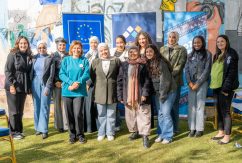
 Foundation Stone Laid for the Aboud Bulk Water Connection Point in Palestine


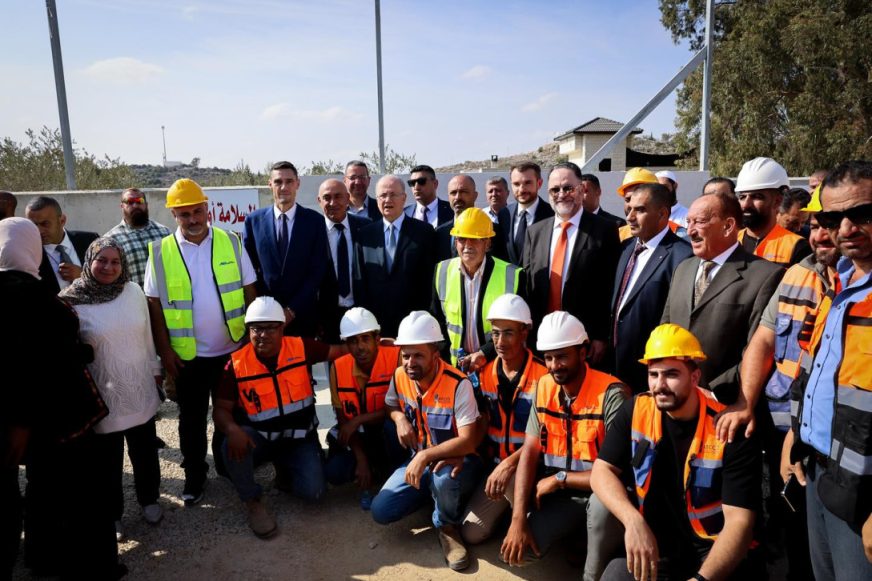
It aims to improve the quality and reliability of water supply services in the Ramallah and Al-Bireh Governorate, ensuring fair distribution of water and enhancing the efficiency of water management to meet the needs of local communities equitably and sustainably. The first phase includes the construction of 45 kilometers of transmission lines, two pumping stations in Aboud and Mazari al-Nubani, and two reservoirs with a capacity of 5,000 cubic meters each in Beit Rima and Umm Safa. The project’s production capacity is expected to reach approximately 25,500 cubic meters per day, benefiting about 90,000 citizens in 22 communities during the first phase, with the second phase extending to include more than 165,000 additional citizens.
In his speech, EU Representative in Palestine Mr. Alexander Stutzmann affirmed that this project reflects the European Union’s firm commitment to supporting the Palestinian government’s efforts to ensure equitable and sustainable access to water. He noted that strengthening water infrastructure is fundamental to achieving sustainable economic and social development.
The beneficiary areas in the first phase include, in Ramallah and Al-Bireh Governorate: Aboud, Beit Rima, Deir Ghassaneh, Qarawat Bani Zeid, Nabi Saleh, Kafr Ein, Deir Abu Mash’al, Deir Nitham, Deir Sudan, Ajoul, Attarah, Birzeit, Arura, Um Safa, Mazari‘ Al-Nubani, Shuqba, Qibya, Shibteen, and the city of Rawabi. In Salfit Governorate, the project will serve Kafr ad-Dik and Bruqin. At the conclusion of the ceremony, participants reaffirmed that strengthening partnerships between national institutions and international development partners is essential to advancing water infrastructure, upholding the Palestinian people’s right to water as a fundamental human right, and continuing joint efforts to achieve sustainable development and build a better future for generations to come.
Countries covered:
-
 Palestine *