





 Algeria
  Egypt
Egypt  Israel
  Jordan
  Lebanon
  Libya
Libya  Morocco
  Palestine *
  Syria
Syria  Tunisia
 “Paths That Last” conference gathered 8 Interreg programmes to Shape Mediterranean Sustainable Tourism


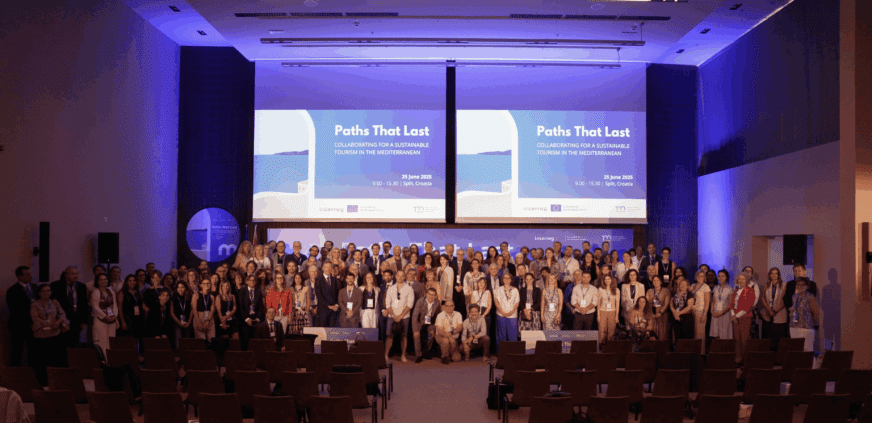
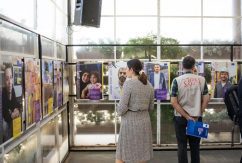
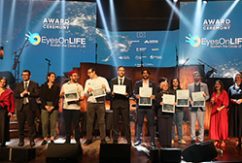
On 25 and 26 of June 2025, the Croatian city of Split hosted “Paths That Last – Collaborating for a Sustainable Tourism in the Mediterranean”, a landmark event bringing together over 340 participants from 9 Interreg programmes. Organised under the Mediterranean Multi-Programme Mechanism, the event was a major success in terms of both participation and outcomes, offering a dynamic space to capitalise on achievements and co-develop a shared vision for the future of sustainable tourism in the region.
The gathering united key actors and projects from 8 Interreg programmes (Euro-MED, Greece-Cyprus, South-Adriatic, Italy-Croatia, Italy-France Maritime, Italy-Malta, Italy-Tunisia, and NEXT MED), showcasing the power of coordinated cooperation across borders. The event marked the result of an unprecedented endeavor by these 7 Interreg Programmes to join forces and work closely together to achieve real synergies for the benefit of Mediterranean partners. Beyond the formal sessions, ‘Paths That Last’ event offered a unique opportunity to network at the Mediterranean level, laying the groundwork for future collaborations within Interreg projects and partnerships.
The two-day event opened with welcome remarks by Croatian officials and Ms. Dubravka Šuica, European Commissioner for the Mediterranean. In a video-message, she highlighted the importance of tourism for the European economy. “To harness the potential of tourism, we will present a new European Tourism Strategy in early 2026, defining a long-term vision for tourism that is environmentally-sustainable, digital and inclusive”, she added. The meeting kicked off with a roundtable focusing on the achievements of Mediterranean Multi-Programme Mechanism, where representatives of the participating Interreg programmes discussed their collaborative efforts under the 2024/2025 Action Plan. The discussion reflected how joint governance and shared priorities are creating tangible results across the Mediterranean basin.
On 26 June, the event concluded with a session dedicated to sharing key takeaways from the workshops and presenting the Peer Learning mechanism — a platform for projects from different programmes to exchange knowledge and best practices through study visits. The mechanism is expected to be fully operational by the end of 2025 or the beginning of 2026. Final remarks from Curzio Cervelli (Interreg Euro-MED), Jean-Pierre Halkin (DG REGIO), and Stella Arneri (Croatian Ministry of Regional Development) reaffirmed the importance of strengthened cooperation among Interreg programmes to increase synergies and enhance the impact of funded projects in the territories.
Countries covered:
-
 Algeria
-
Egypt
-
Israel
-
Jordan
-
Lebanon
-
Libya
-
Morocco
-
Palestine *
-
Syria
-
Tunisia