











 Algeria
  Egypt
Egypt  Israel
  Jordan
  Lebanon
  Libya
Libya  Morocco
  Palestine *
  Syria
Syria  Tunisia
 Green Forward: Empowering Egypt’s green transition through business support organisations


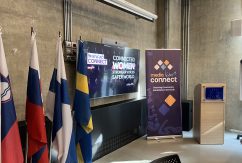
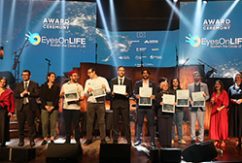
In October 2025, Egypt hosted a key milestone of SPARK’s Green Forward meso-level intervention, funded by the European Union and implemented in Egypt in partnership with GESR – Misr El Kheir Foundation. GESR – MEK collaborated with Techne Summit, an international investment and entrepreneurship event held in Egypt that focuses on the Mediterranean region. The collaboration aimed to connect startups, investors, business support organisations (BSOs), and corporations to promote innovation and partnership development.
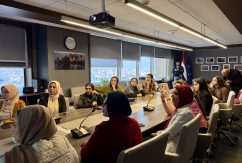
In this context, GESR – Misr El Kheir led a panel discussion titled “Empowering Egypt’s Green Transition: The Strategic Role of Business Support Organisations (BSOs)”, which convened experts from the Egyptian government, academia, consulting, and the private sector. The session explored how different actors can collectively strengthen Egypt’s green transition through innovation, capacity-building, and entrepreneurship.
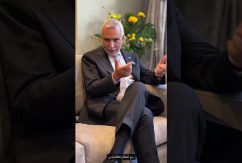
The panel offered a comprehensive look at Egypt’s green transition through the lenses of public institutions, academia, and private sector innovators. Each perspective revealed how different actors, acting as or alongside Business Support Organisations (BSOs), contribute to strengthening the country’s sustainability ecosystem. Representing the Ministry of Industry, Dr. Mohamed Abdelhameed shed light on Egypt’s network of 12 technology centres covering sectors from textiles to plastics and furniture. “Our role spans from product design to prototype validation and market entry,” he explained. “We prioritise resource efficiency, waste management, and support for green manufacturing practices. Sustainability, from our standpoint, is about optimising performance while minimising emissions and waste.”
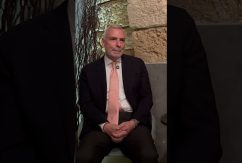
Building on the government’s structural perspective, Prof. Dr. Mohamed Galal emphasised academia’s pivotal role in embedding green entrepreneurial thinking early on. “Everyone-engineers, scientists, accountants-starts as a student,” he said. “We embed entrepreneurial and intrapreneurial mindsets from the start of their journey.” At Al-Azhar University, six technological incubators support students from ideation to market. Through initiatives such as the E-Club, hackathons, and partnerships with organisations like Misr El Kheir (MEK) and the Academy of Scientific Research & Technology (ASRT), the university encourages applied innovation. Over 250 startups have been incubated so far.
In this context, universities act as academic BSOs, providing young innovators with access to labs, expert mentorship, and opportunities to turn ideas into viable green enterprises. Dr. Galal also highlighted intrapreneurship-the ability of graduates to innovate within existing organisations-as a way for BSOs to extend their impact beyond startup creation.
Complementing the academic and policy views, Eng. Mohamed Ehab, co-founder of Waste Marche, shared the private sector’s hands-on experience navigating the realities of the green market. Today, Waste Marche derives most of its revenue from consulting and capacity-building for SMEs. It now operates as a private-sector BSO, reflecting how adaptability and ecosystem engagement can sustain green ventures amid changing market realities and this by supporting other companies in their green transition.
Countries covered:
-
 Egypt
Egypt