






 Algeria
  Egypt
Egypt  Israel
  Jordan
  Lebanon
  Libya
Libya  Morocco
  Palestine *
  Syria
Syria  Tunisia
 EU at El Gouna Film Festival: Supporting Emerging Filmmaking Talents


Monica Medhat, who studies filmmaking in Egypt, did not expect to meet and exchange with top Egyptian and European filmmakers and producers. This was achieved through the EU-funded Cine Gouna Emerging Talent Programme, taking place during the eighth edition of the El Gouna Film Festival in Egypt. The programme, held in partnership with the European Union and the Drosos and Sawiris Foundations for Social Development, aims to empower the next generation of filmmakers in Egypt for the third year in a row, through panel discussions, lectures, workshops, film screenings and educational activities specially designed for them. “I benefited from everything in the programme, as it enabled me to connect with as many experts as possible who helped participants in different fields such as acting, writing and directing,” says Monica, who now dreams of her first film, describing the experience as “the real opportunity for anyone who is striving to achieve something in the industry.”
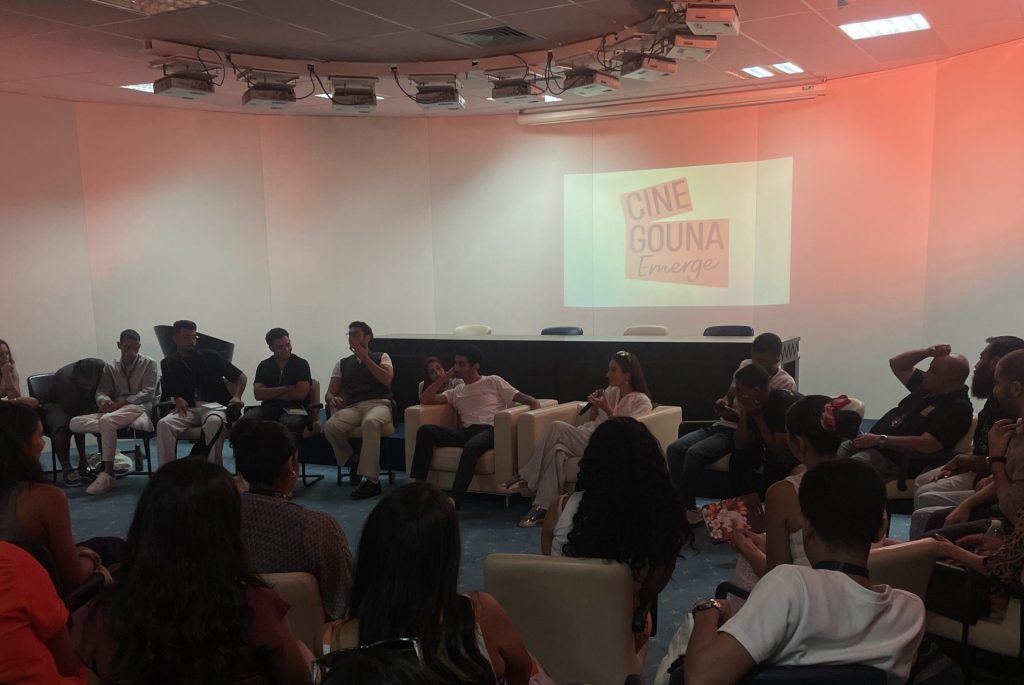
Monica is one of 120 participants selected for this year’s edition of the programme, from among more than 1,000 young talents who applied to participate in the Cine Gouna Emerging Talent Programme in its various tracks: the first is “See Me”, which targets up-and-coming actors and prepares them to deal confidently with the press and media, then the “Emerge: Take Two” track, which is dedicated to returnees from previous talent programmes to be mentors to their peers, and the “Perspectives” track, which is for photographers, film critics and content creators. It provides them with the opportunity to cover the festival through articles, photos and video content, in collaboration with the festival’s press and print team. This is in addition to the main programme that invites young filmmakers and film professionals such as directors, screenwriters, producers, actors, directors of photography, film editors and sound designers to join the festival through film screenings, masterclasses, panel discussions and workshops.
After one of those discussions with director Karim El-Shenawy and artist Amina Khalil, Baher Al-Nuwaihi, one of the participants in the programme, expressed his happiness with “the opportunities offered to young people, enabling them to participate in a big festival and interact easily with great filmmakers, such as those” he says. “In this programme, we were able to build a great network, as the festival’s activities achieve the equation of enjoyment and benefit together,” he adds.
El Gouna Film Festival, one of the leading festivals in the Middle East, aims to showcase a diverse range of films to audiences who are passionate about cinema, create a better spirit of communication between cultures through cinema, and connect filmmakers in the region with their international counterparts in order to foster a spirit of collaboration and cultural exchange. This year, around 70 films will participate in the festival, including feature films, short films and documentaries, most of which are European films and co-productions. The most prominent participating countries include Belgium, Germany, France, Italy and Spain.
“European cinema is strongly present, not only in screenings, but also in seminars and programmes, as well as in opportunities to form production partnerships and collaborations between Egyptian and European filmmakers,” says Marianne Khoury, artistic director of the festival. She then talks about cooperation with the European Union to support the “Cine Gouna Emerging Talent” programme, which “this year targeted trainees from Africa as well, not just Egyptians,” describing it as “a successful programme that opens doors and grows with time.”

“We hope to inspire the next generation of storytellers to dream bigger, to break boundaries, and to feel that their voices really matter,” she continues.
This edition of the festival also saw the organization of a two-day short film screenplay workshop, in collaboration with EUNIC (National Institutes of Culture of the European Union) and a “narrative” workshop, recalls Mariam Naoum, the workshop’s founder and head of the Cine Gouna Short Film Programme. “The aim of the workshop was to get the participants to know about how to write a script and produce films, and the feedback has been very positive, so we look forward to more partnerships with the European Union in the upcoming editions of the festival,” she says.
In general, festival officials consider the Cine Gouna programme, as it is defined, to be its “industry arm.” The programme is a series of diverse events serving the film industry, with the aim of developing and empowering Egyptian and Arab filmmakers and helping them find the necessary technical and financial support. It consists of four programmes: “Cine Gouna to Support Film Production”, “Cine Gouna Filmmakers”, “Cine Gouna Market”, and “Cine Gouna for Emerging Talents”.
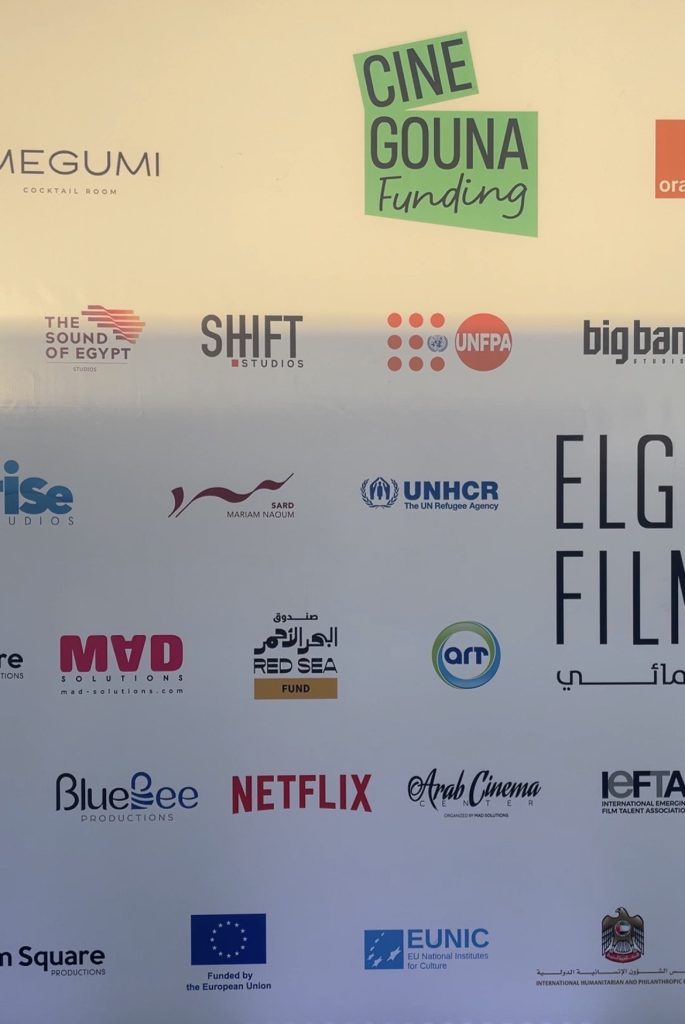
In the upcoming editions, the Cine Gouna Emerging Talent Programme will target a larger participation of young directors, writers, actors, photographers and producers, who can apply through the festival’s official website. Participants will be selected based on their talent and artistic vision, and the programme will cover their accommodation and official accreditation to attend the festival, including access to film screenings, the Cine Gouna Forum and sessions, and Cine Gouna Market events.
As for the cohort that was hosted and trained this year such as Monica and Baher, Amr Mansi, Executive Director of the festival, said: “The programme has played a vital role in nurturing these new talents, which makes us look forward to seeing how they have benefited from this unique experience, and how they will contribute to the future of cinema in our region and beyond.” As for Hayet Jwili, the programme director, she considers that “this year’s cohort reflects the diversity, talent and ambition that the festival and the programme’s partners seek to support;” she adds “I am excited to follow the collaborations and stories that will emerge from this journey.”
Namir Abdel Masih’s “Life After Siham” was an example for the new participants in the programme, as it received a production grant from the “Cine Gouna” programme, and won the “EU in Egypt” award for the best documentary film at the Cine Gouna Emerging Talent Festival, which was held at the end of the El Gouna Film Festival. This award came based on the selection of these young people participating in the programme, which Namir considers in his interview to be “a great honour,” because, as he says, “he learned cinema from watching the films of great directors who encouraged him to make films, and when that happened, he felt he earned something, and now he is communicating it to others.”

The film, which tells a family story and connections between generations, won the Silver El Gouna Star for Best Documentary and El Gouna Star for Best Arab Documentary Film, which proves according to Namir, that “an Arab film does not mean that it is confined to the Arab audience, as human aspects are the same for everyone, and we must find this common space between us.” Speaking about grants provided by the festival’s partner institutions, such as the European Union, he concludes: “The grants that the festival gave helped me produce this film, and festivals became not only platforms for film showings, but places that can finance the film industry, and that’s very important.”


