

















 Algeria
  Egypt
Egypt  Israel
  Jordan
  Lebanon
  Libya
Libya  Morocco
  Palestine *
  Syria
Syria  Tunisia
 From Fear to Protection: Women Journalists Confronting Digital Violence


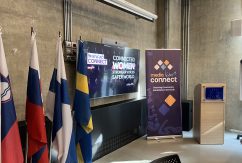
“We, women journalists in our country, do not have the luxury of journalistic protection, there are few job opportunities, and sometimes holding on to the opportunity requires concessions that we are forced to make.” This statement, which sums up a complex professional and humanitarian reality, launched the discussion during the StoryLab CONNECT – Gender 16, held in Amman on 4 December 2025, organized by the Regional Network Media Connect and the EU Delegation to Jordan. It was not a mere expression of emotion, but an explicit description of the working conditions that many women journalists face, where the fragility of professional opportunities intersects with the absence of clear protection systems, especially in the digital space.
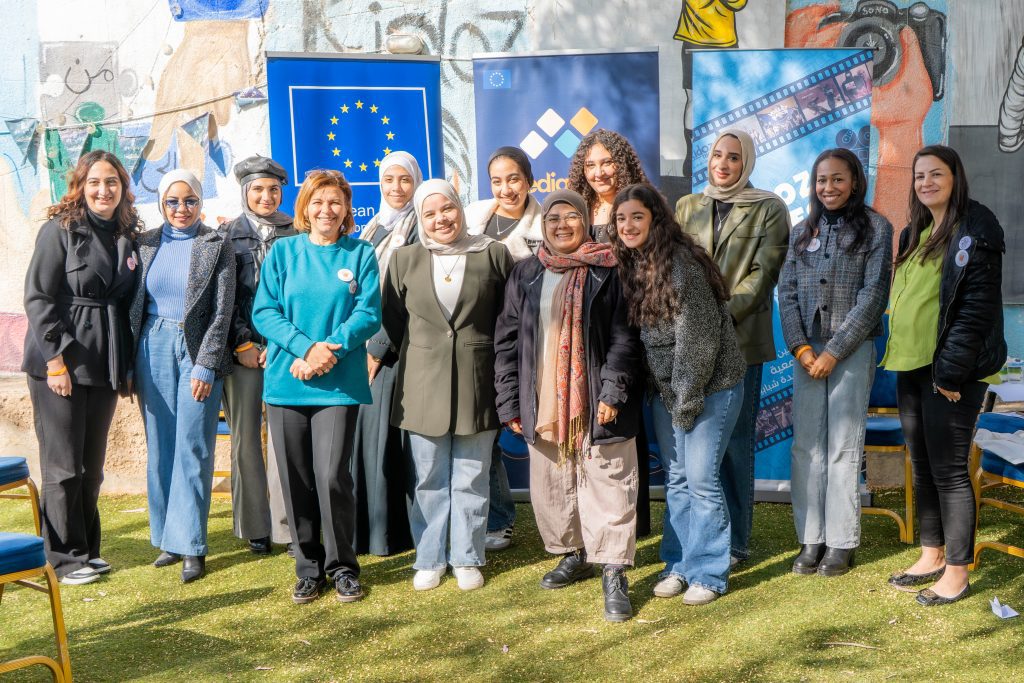
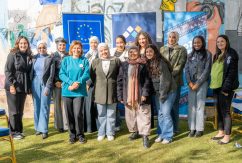
At StoryLab: Gender 16, women journalists from various Jordanian media organizations and journalism students came together to break a long-standing silence and share experiences that are often lived in silence. The testimonies were similar: threatening letters, hacking into personal accounts, attempts to blackmail, a constant sense of insecurity that haunts us, and makes our task of conveying the truth a psychological burden more than a professional responsibility.
We are not alone
In an open session for participation, our stories broke the silence, and we found ourselves in the same boat hearing stories that were almost copies of each other: each of us had gone through a smear campaign for writing bold investigations or had been harassed because we appeared on the screen, or had our accounts hacked because of the opinions and news we shared. We are not exaggerating, but fear is real, and the problem exists.
Figures also confirm that what we are going through is not marginal. According to recent studies, 85% of women globally have witnessed some form of digital violence, while 38% of them have been directly exposed to this form of violence. From this shared reality, we started to think together, if suffering is one, why can’t our protection be one, and who can we resort to?
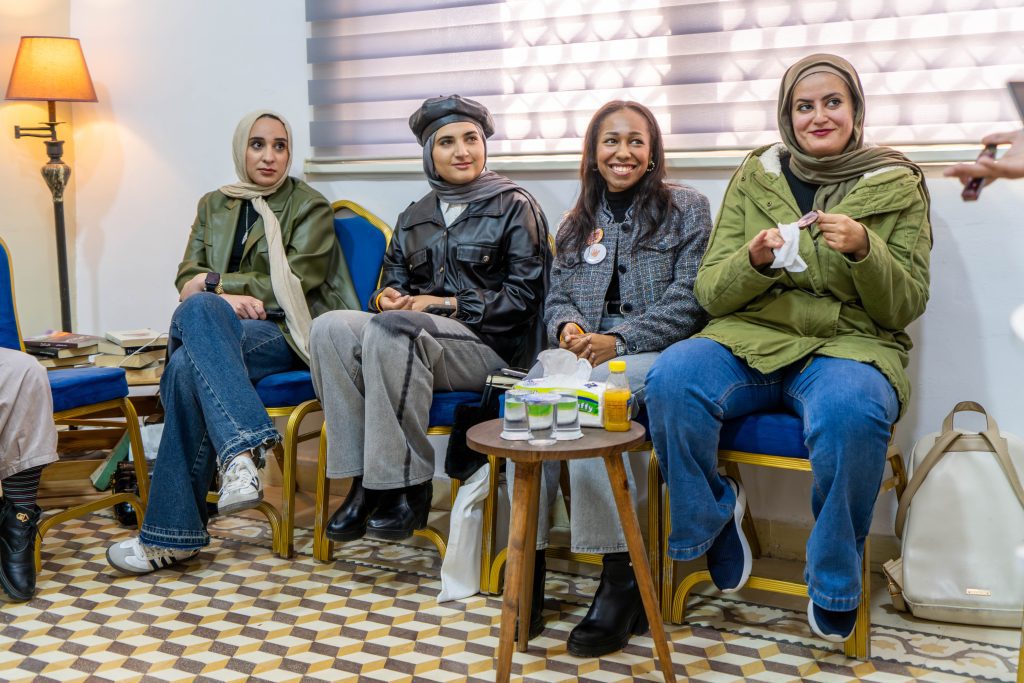
Fear turns into tools
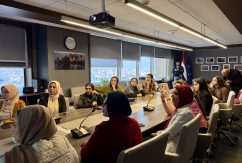
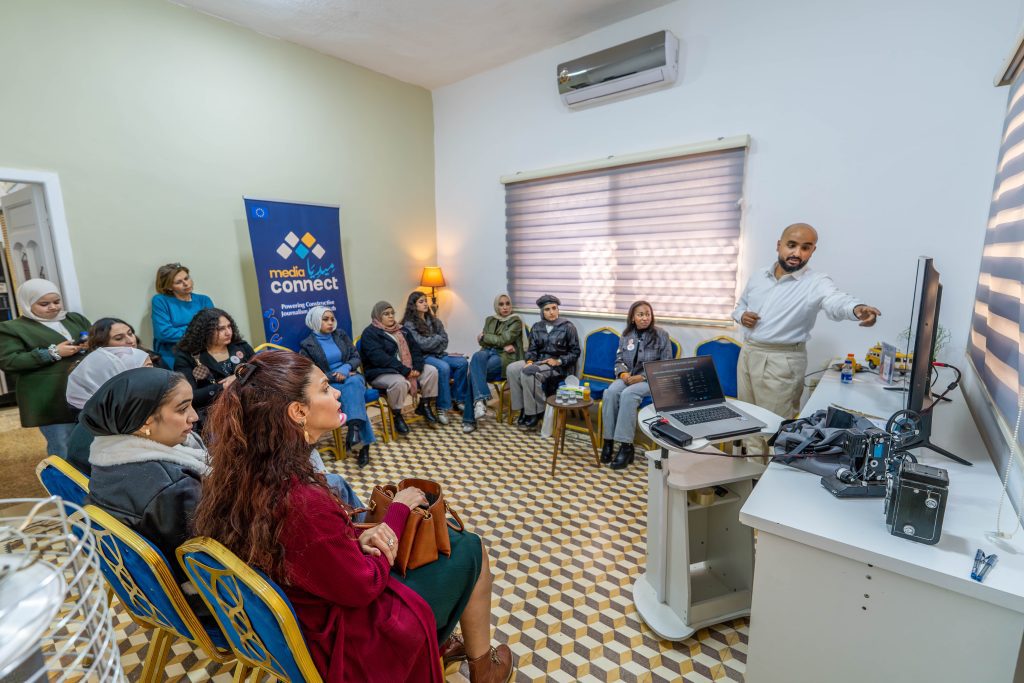
In a meeting with a digital security expert, the discussion went from describing the problem to looking for concrete solutions. The goal was not to amplify fears, but to provide us with practical skills that would enable us to continue working as journalists with greater confidence. We learned about the indicators of account hacking, the basics of creating secure passwords, how to choose privacy-respecting communication tools, in addition to ways to search for sensitive information with minimal digital impact, and parties that be turned to when exposed to any form of digital violence. More important was the shared awareness that digital violence is not a sporadic act that can be overlooked, but a real danger that needs to be learned and confronted, just as we learn editorial, investigative, and interviewing skills.
The media we aspire to
In a visit to Radio Al-Balad, as a model of community media, we saw how a balance can be struck between telling the story and protecting those who tell it. By discussing with the radio team, we learned about professional approaches to addressing issues of violence with sensitivity and responsibility, respecting victims while minimizing the risks to journalists or sources. This experience has given us the conviction that our role is not limited to defending ourselves, but also to contribute to building conscious and safe media content, capable of breaking the silence without exposing its owners to harm.
The beginning of the journey
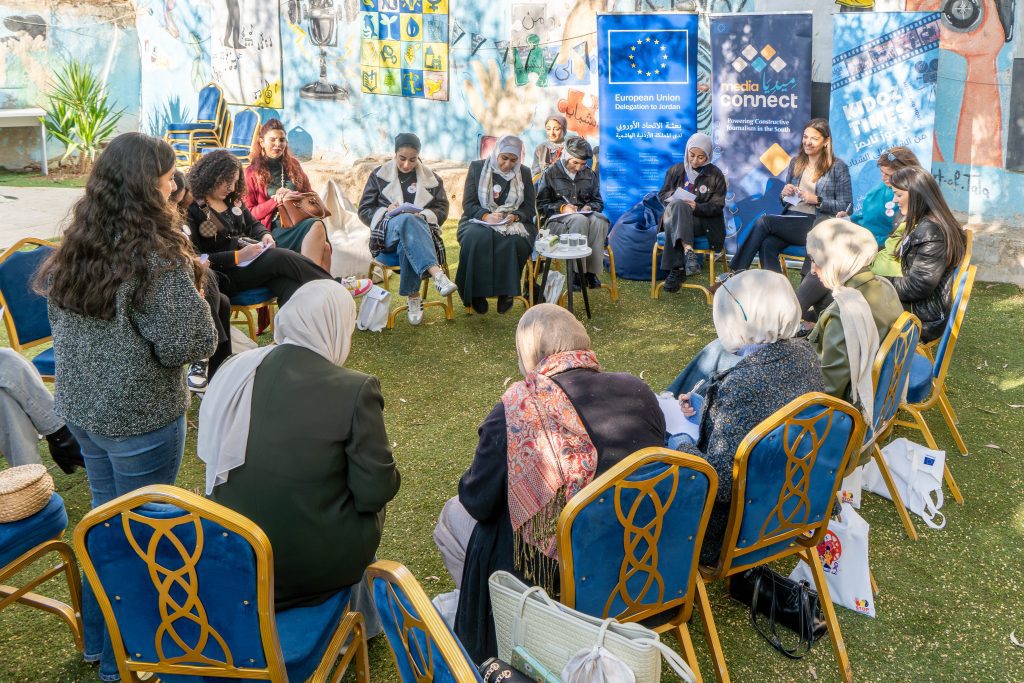
As the event ended, participants realized that there was still a long way to go, but which became clearer. We left with two interrelated responsibilities: protecting oneself in a digital space where the screen has become a tool of pressure and danger and the belief that collective confrontation is possible. Fear is no longer an abstract sensation, but has turned into practical steps: reviewing privacy settings, knowing support channels when attacked, and building networks of solidarity among women journalists as a first line of defense against digital violence.


