





 Algeria
  Egypt
Egypt  Israel
  Jordan
  Lebanon
  Libya
Libya  Morocco
  Palestine *
  Syria
Syria  Tunisia
 Research, policy institutions and civil society organisations meet in Amman to launch the UfM Women, Peace and Security-Climate Network


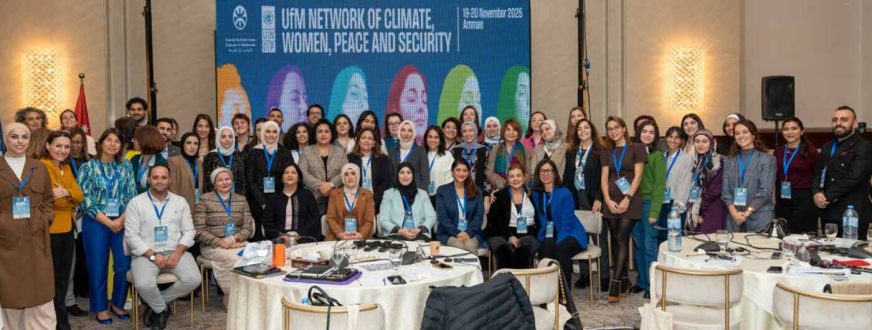
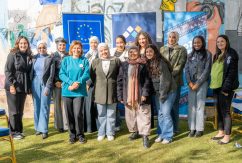
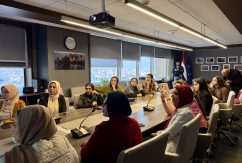
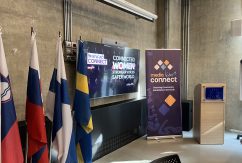
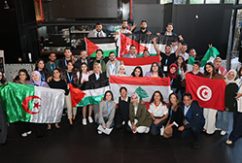
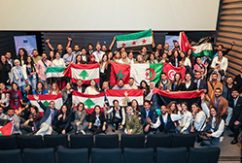
19-20 November 2025, Amman, Jordan. Around 80 representatives from governments, civil society, international organisations, youth networks and research institutions met in Amman for the Regional Capacity Workshop and Stakeholder Dialogue on Climate, Women, Peace and Security (WPS), organised by the Union for the Mediterranean (UfM) under the haut-patronage of Wafa Bani Mustafa, Minister of Social Development of Jordan who honored with her presence the Dialogue Conference. The event, held in partnership with the Jordanian National Commission for Women (JNCW), and UNDP, marked an important milestone for regional cooperation with the launch of the UfM WPS-Climate Network. This new mechanism aims to strengthen coordinated action across the Mediterranean to address the interconnected challenges of climate change, gender inequality and peace and security.
Over two days, participants explored the gendered impact of climate change and conflicts across the Mediterranean region. A new conceptual framework on how to make the nexus Climate and WPS actionable in the planning, implementation and monitoring of Climate and WPS Action Plans was provided by UNDP Arab Office Gender team: the framework will lead to a guidance toolkit to implement the nexus. The participants, through working group interactive sessions, were requested to contribute to the main pillars of the guidance note.
During the Stakeholder Dialogue, the UfM officially launched the WPS-Climate Network, outlining its vision, governance and work priorities for 2026. The Regional Network, with its Knowledge Hub and the UNDP Guidance Note form an interconnected system where the Network drives action, the Hub provides expertise, and the Note serves as a practical tool. Network is built on three thematic pillars, data and evidence, capacity building and skills, policy advocacy and the Knowledge Hub will deliver its first Regional Policy Report in 2026, mapping the climate-WPS landscape, identifying gaps, and offering actionable recommendations. This report will explicitly promote the UNDP Guidance Note, creating synergy between evidence generation and implementation. Governance will involve a Steering Committee and thematic working groups, with membership drawn from governments, UN agencies, civil society, youth, academia, and regional organizations via an Expression of Interest process.
Discussions highlighted the importance of aligning climate adaptation strategies with gender equality commitments; enhancing inclusive decision-making; and fostering regional partnerships to address shared environmental and security challenges. A dedicated session brought together National Gender Machineries (WPS) and national Climate Focal Points, who shared good practices and lessons learned from their respective contexts. Exchanges among representatives from Jordan, Palestine, Egypt, Lebanon, Morocco and Tunisia showcased concrete national efforts and emerging opportunities for strengthened regional collaboration.
Countries covered:
-
 Egypt
Egypt
-
Jordan
-
Lebanon
-
Morocco
-
Palestine *
-
Tunisia