














 Algeria
  Egypt
Egypt  Israel
  Jordan
  Lebanon
  Libya
Libya  Morocco
  Palestine *
  Syria
Syria  Tunisia
 StoryLab Provides a Safe Space for More Responsible Journalism


During the “16 Days Against Gender-Based Violence” campaign, running from 25 November to 10 December 2025, digital violence against women and girls was put back on the global debate, under the slogan “Unite to End Digital Violence Against All Women and Girls“. This debate aims at shedding light on a reality that is no longer marginal, as the digital space has often become a space of threat, especially for women working in the public sphere, most notably female journalists.


 When violence becomes part of journalism
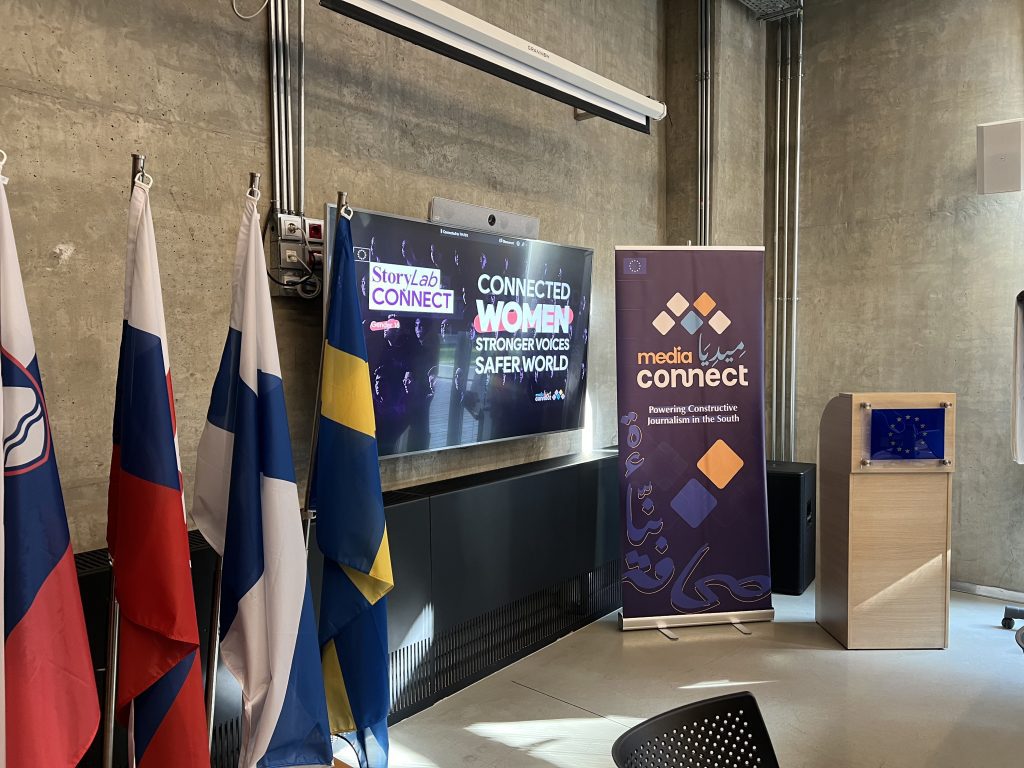
Digital violence doesn’t stop at the screen’s borders. A message, a comment, a stolen photo, or a fake clip… all of these can quickly turn into a smear campaign, a direct threat, or lead to a forced withdrawal from the public sphere. In the Lebanese media context, where women journalists are already working under accumulated economic, professional, and security pressure, this type of violence becomes an additional attrition factor, which not only leaves its impact psychologically and socially, but also directly reflects on the professional path. Women journalists stop writing after receiving death threats, female activists delete their accounts to protect their families, and women are forced to remain silent or leave the profession. Women journalists face double the targeting, with 73% of them experiencing digital violence, and 20% also experiencing related physical violence, especially when covering gender, politics, and human rights issues (UNESCO, 2021). These figures clearly show that violence is no longer an exception in the lives of women journalists, but a potential and repeated experience, which intersects with the nature of their work and with weak legal and institutional protections. In this context, initiatives have emerged that attempt to create safe spaces for discussion and learning. One of them is the StoryLab CONNECT: Gender 16 initiative, launched by the EU Neighbours South programme via the Media Connect network and has been successfully implemented in eight countries of the Southern Mediterranean.
From Vision to Application
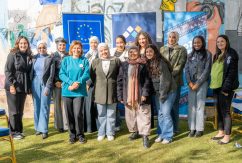
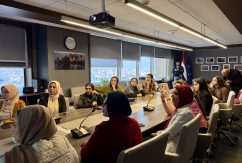
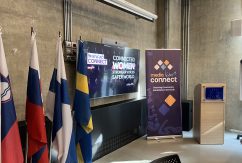
In Lebanon, the StoryLab CONNECT: Gender 16 initiative was held on 3 December 2025, funded by the EU Delegation to Lebanon, where young female journalism students and journalists at the beginning of their careers, and also experienced women and female civil society actors, were brought together in a full day dedicated to exchange, learning and gaining practical tools. In her opening remarks, Alessandra Wiezzer, Head of Cooperation at the EU Delegation to Lebanon, stressed that “gender equality is a core value in the work of the EU”, underlining that the economic crisis in Lebanon has contributed to the exacerbation of gender-based violence. She pointed to the importance of breaking the silence surrounding these issues, and the need to acknowledge and address violence, support survivors, and enhance the role of women in political participation and decision-making, “as laws, as well as mechanisms for their implementation, are often drafted by men.” This vision formed the general framework of the day, with sessions built cumulatively, starting from personal experiences, through professional analysis, and ending with practical tools for dealing with violence.
“Open Heart” Discussion
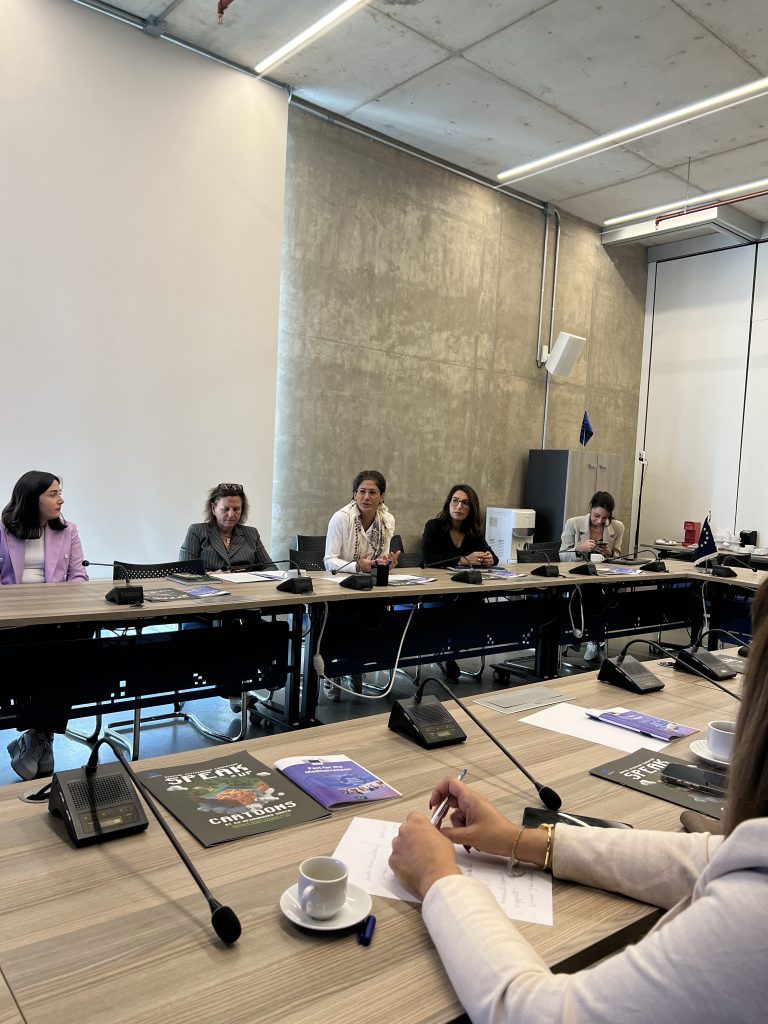
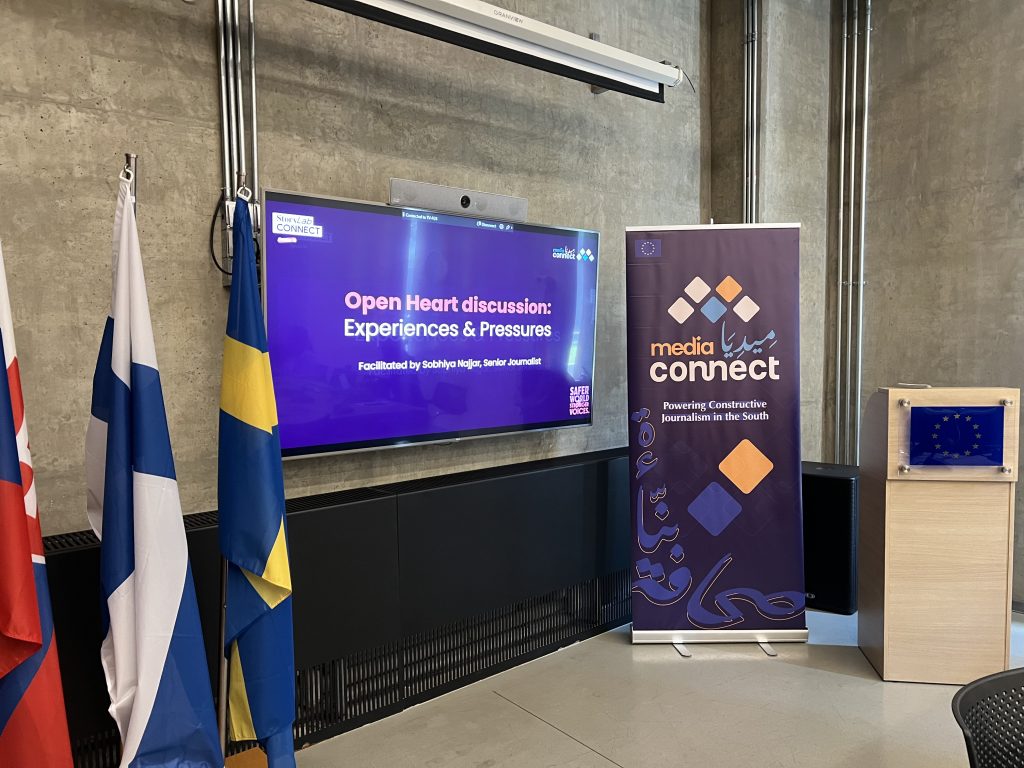
The day opened with a session titled “With an Open Heart: Experiences and Pressures”, moderated by Lebanese journalist Sobhiya Najjar, which was meant to offer a safe space for the women journalists present to share sensitive personal experiences of harassment, pressure, silence, and the invisible harm that accompanies them in media work.
Journalist Fatima Al-Bassam says such sessions are “necessary to express what we are facing”, while journalist Nahle Salameh expressed her wish that the session had not ended, stressing that the discussion could have lasted for hours, describing it as a space to exhaust “that could save us from blowing up”. As for Najjar, she said these sessions play a pivotal role in breaking the silence and strengthening the psychological strength of women journalists, and “they must be built upon and held regularly, not treated as a sporadic event.”
From Experience to methodology: An Introduction to Constructive Journalism
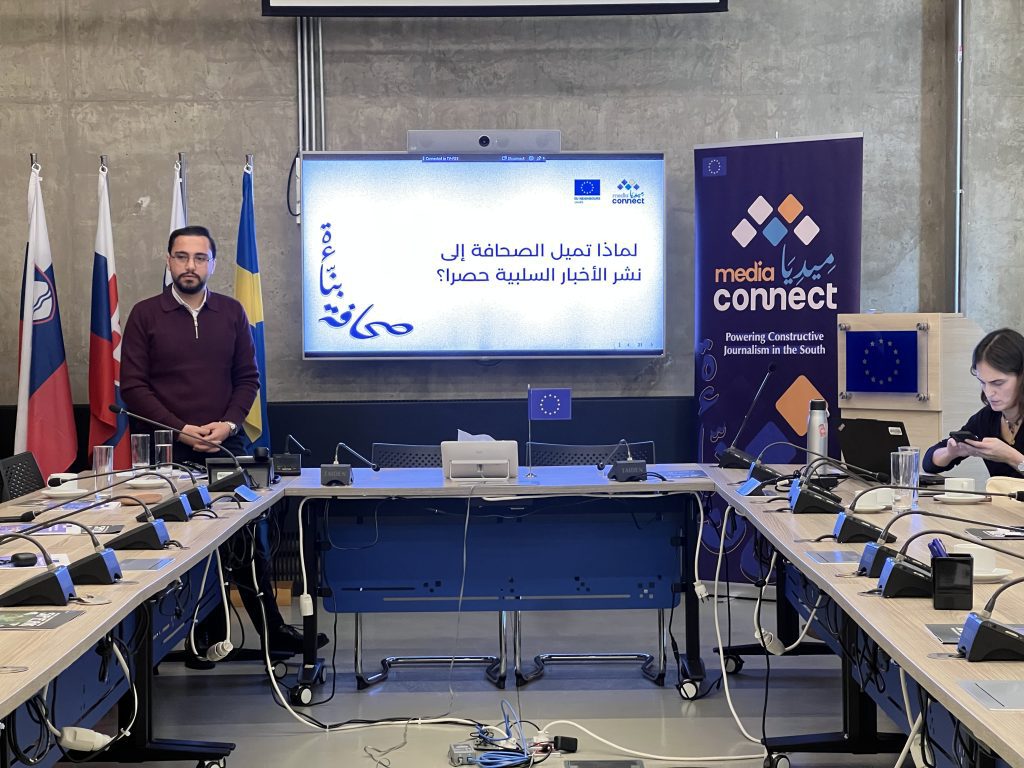
The discussion moved to the role of journalism itself, in an interactive session led by journalist Ahmed Abu Hamdan, as a member of the “Media Connect” network, and which focused on a key question: How can GBV be covered without perpetuating despair?
The session presented constructive journalism as a methodology that does not ignore negative news but rather puts it in a broader context. Through a practical example and exercise in analyzing a journalistic story, participants discussed how to turn traditional coverage into a constructive story. Four of them followed the discussion more deeply with the trainer after the session, indicating their interest in transforming the methodology from a theoretical concept into a tool that can be used on a daily basis.
Journalist Vanessa Klass expressed her interest in this constructive approach, which “presents the problem, but sheds light on the solutions”, while journalist Maria Mansour points out that its importance also lies in highlighting the limitations and challenges that may hinder the sustainability of these solutions.
On the invisible psychological cost of journalistic work
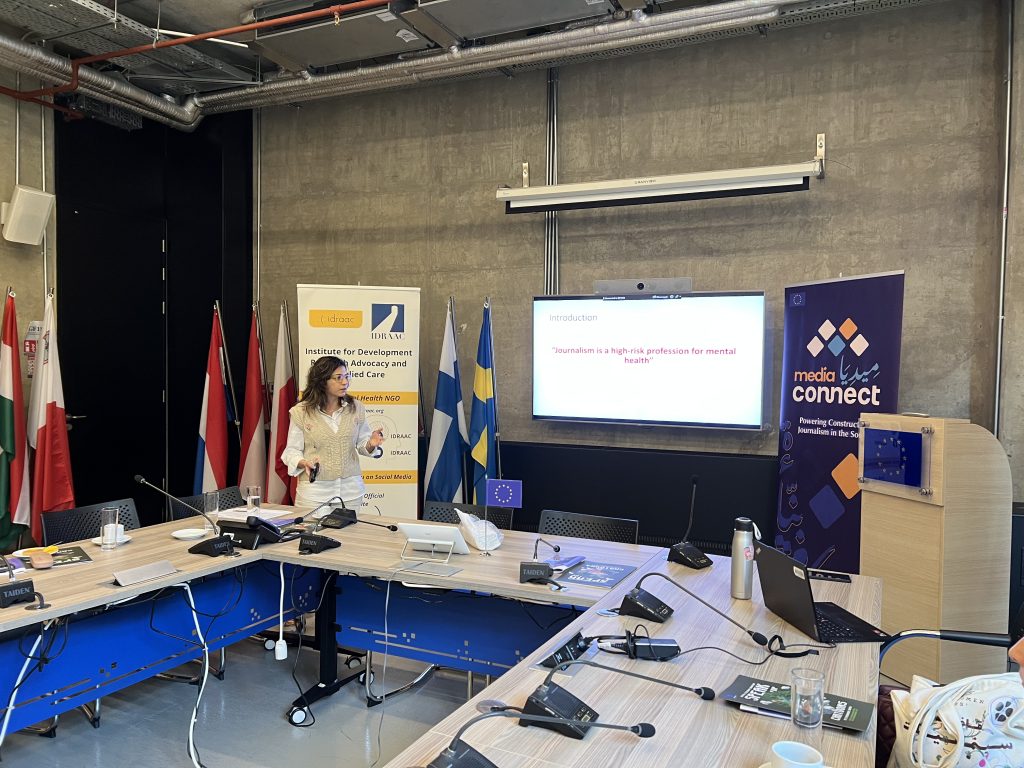
Unfortunately, going behind sensitive stories and covering them does not go unnoticed. The third session on mental health and occupational burnout, led by Dr. Mary Lee Wakim from IDRAAC, who took part in the event, highlighted the reality of journalism as a profession that is at high risk for mental health, especially for women journalists. Wakim stressed that what women journalists feel is a “natural response to abnormal circumstances,” stressing that emotional reaction to stories is not a weakness, but part of the Journalistic work’s humanity. The session discussed concepts such as empathy fatigue, moral harm, and the distinction between secondary trauma and PTSD, while providing practical tools to promote psychological resilience and support among colleagues within newsrooms.
Digital safety to protect the profession and self
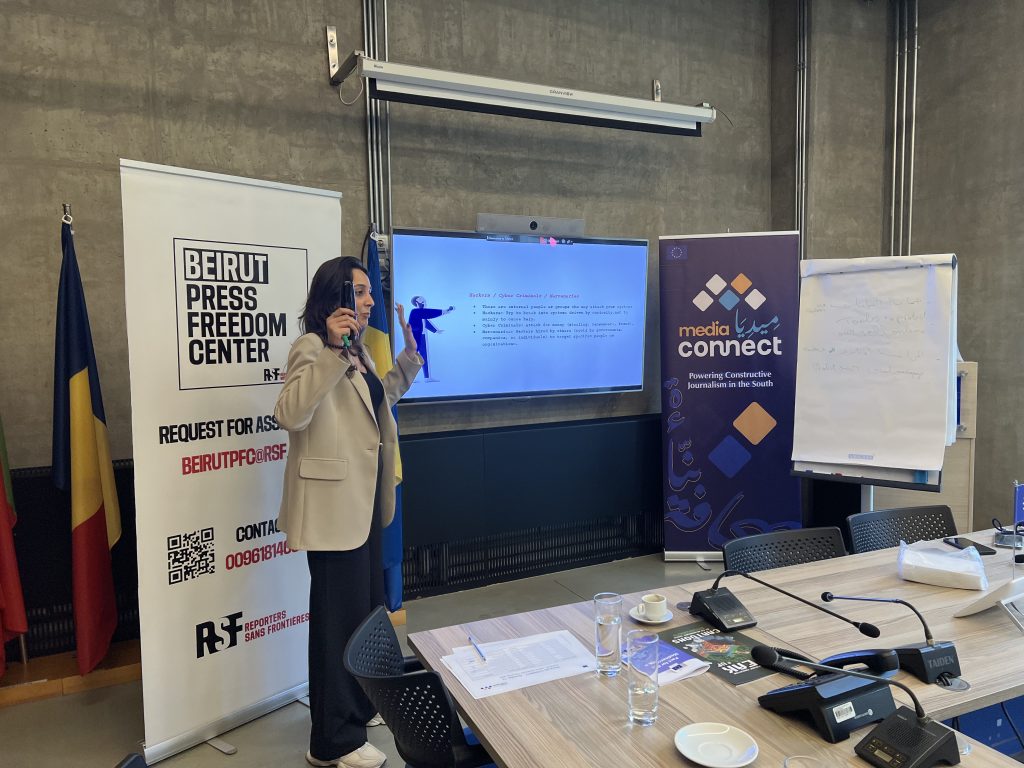
As we moved from the field to the digital space, the final session covered the topic of digital safety, led by Iman Al-Abed of Reporters Without Borders’ Beirut Center for Press Freedom, who also participated in the event. She addressed the growing digital threats facing women journalists, and provided practical tools for managing passwords, enabling two-factor authentication, splitting accounts, and dealing with cyberbullying. Al-Abed believes that women journalists are often subjected to double digital targeting in order to silence them, stressing that digital security is “not a luxury, but a prerequisite,” and that protecting women journalists digitally is in essence a protection of press freedom itself.
Impact Begins… And it doesn’t end here
Lebanon’s StoryLab CONNECT: Gender 16 initiative has demonstrated that safe spaces can open up frank conversations, and that women journalists need approaches that combine ethics, mental health, and digital safety. But it also exposed the limitations of these initiatives when they remain confined to a narrow time and space frame, with gaps in laws and uneven enforcement, and a lack of sustainable funding that can turn these experiences into long-term pathways.
In this context, Nahle Salameh, a journalist specializing in women’s issues and marginalized groups, believes that “many women do not remain silent because the violence is simple, but because the cost of speaking up in a society that blames the victim may be higher than the cost of being subjected to the abuse itself,” which makes silence the result of an entire system, rather than an individual choice. From these spaces, the silence begins to be broken, and the seeds of deeper understanding are planted, which may not bear fruit immediately, but which open up an irreversible path. Such initiatives may not end digital violence, but they do reframe what is essential to journalism today: how can women journalists continue their careers in an environment that does not provide them with adequate security? A question that remains open… like the battle itself.


